
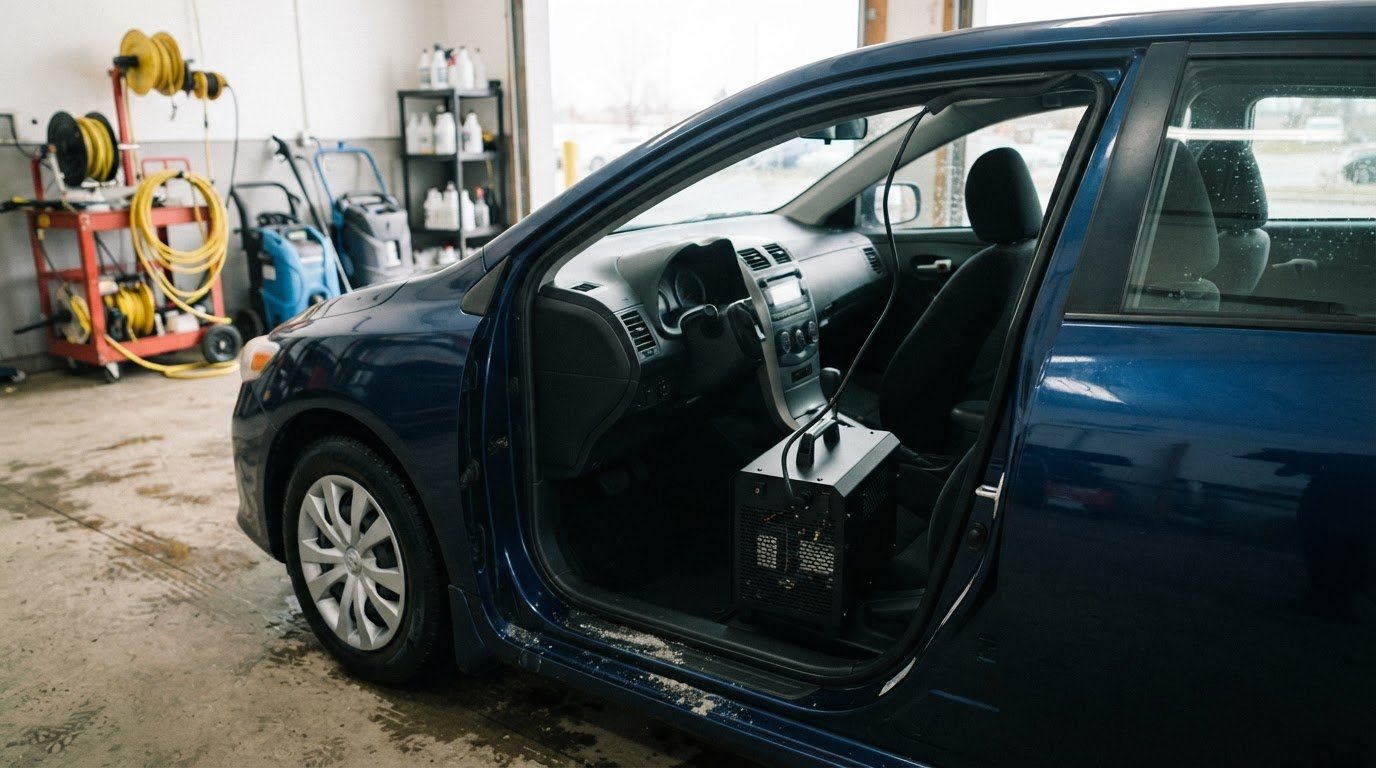
Deep cleaning gives a car interior ozone treatment a better chance of reducing lingering odours. The process exposes the vehicle’s interior to ozone, which can react with odour-causing bacteria, smoke particles and organic contaminants. What the treatment can do depends in part on whether the source has been cleaned away first.
It’s reasonable to expect ozone to tackle stubborn cabin smells, including odours that linger after a basic clean. But treating a dirty surface can leave the source behind. Cleaning first helps reveal and remove odour sources instead of leaving them trapped under dirt.
Here, you’ll learn how ozone affects odours, why preparation and cleaning matter, and what to understand about respiratory risks. You’ll also learn why treatment time varies with the vehicle and odour severity, and why airing out the car afterward matters. The goal is to clarify what the process can do and when a thorough interior detail is the sensible first step.
Key Takeaways
- Ozone exposure can range from 30-60 minutes for mild odours to 2-4 hour sessions for severe contamination, depending on the vehicle and the smell.
- Remove people, pets, plants, and food from the vehicle before treatment, and consider the effects prolonged ozone exposure can have on interior materials.
- Ozone reacts with odour-causing contaminants, but cleaning surfaces first helps expose the sources rather than leaving them covered by dirt.
- Ozone can affect respiratory health. After treatment, the vehicle needs thorough outdoor airing before people get back inside.
- A thorough interior detail can help address dirt and odour sources before treatment; Nanak Car Wash offers Car Detailing Packages.
Ozone Treatment For Cars: Does It Really Eliminate Odors?
Ozone treatment can reduce lingering smells by reacting with odour-causing contaminants inside a vehicle. It may affect bacteria, but it should not be treated as a way to remove mould or allergens. Those require physical cleaning or removal.
Repeat Sessions and Exposure Time
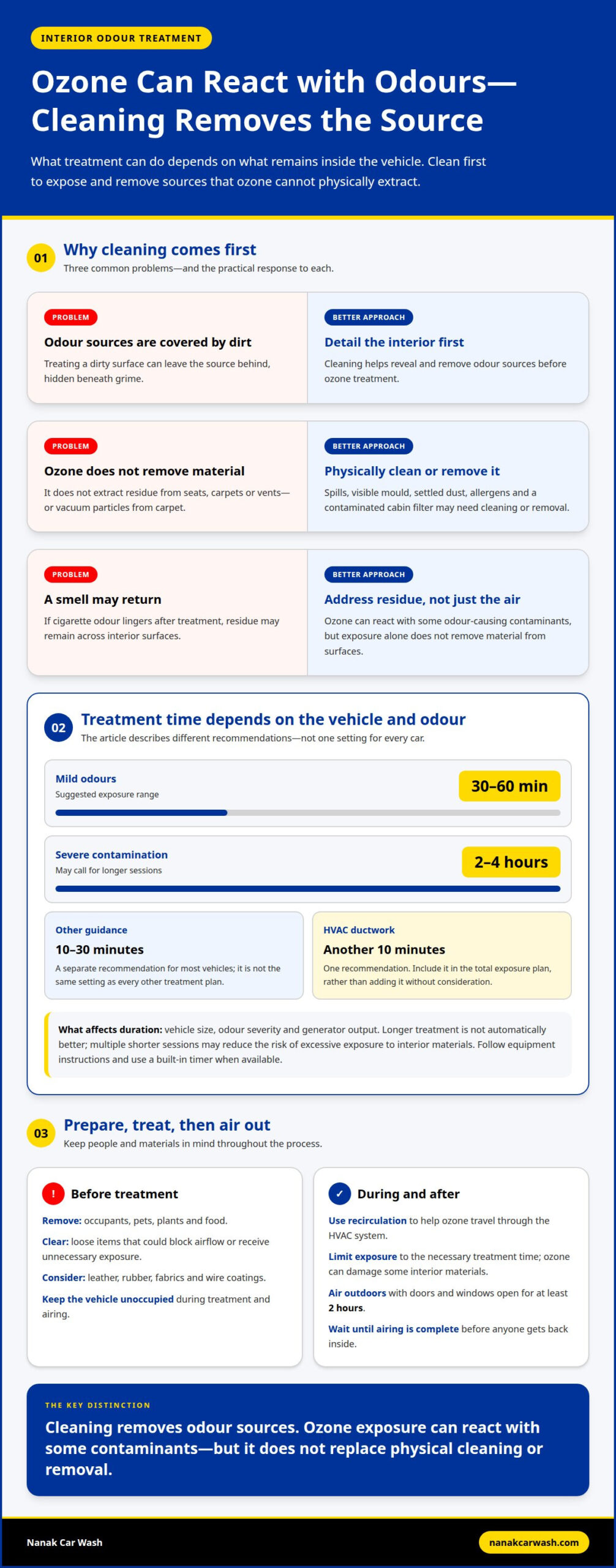
Exposure time is how long ozone circulates inside a closed vehicle, and it matters because longer treatment isn’t automatically better. For mild odours, suggested exposure ranges from 30-60 minutes; severe contamination may call for 2-4 hour sessions. Some recommendations favour multiple shorter sessions over one extended treatment, potentially reducing the risk of excessive exposure to interior materials.
Other guidance suggests running an ozone generator in most vehicles for 10 to 30 minutes. These figures describe different treatment recommendations, not a single setting for every car. Vehicle size, odour severity, and the generator’s output all affect how ozone disperses and how long treatment takes. Follow the equipment’s instructions and use a built-in timer when available, so the generator shuts off automatically.
Odour and Contaminant Removal
Ozone treatment addresses odours by exposing contaminants inside the vehicle to ozone, a reactive gas. It may react with bacteria and organic contaminants, but it does not extract material from seats, carpets or vents. That distinction matters when smells come from a spill, visible mould or settled dust: the source may still need cleaning or removal.
So, does car ozone treatment remove mould, bacteria or allergens? Ozone can react with bacteria and some odour-causing contaminants, but it is not a substitute for removing mould or allergens from surfaces. For example, ozone does not vacuum particles out of carpet or remove a contaminated cabin filter.
Odour severity shapes the practical treatment window. A small car with a mild smell might receive 30 minutes of treatment, while a larger vehicle with a difficult odour could need a few hours. These examples show why vehicle size and the type of smell matter; cigarette smoke may linger across several surfaces, while a localized spill has a more specific source.
Ventilation settings also affect where ozone travels. Running the vehicle’s ventilation on recirculation helps distribute it through the HVAC system, including the ductwork. A separate recommendation suggests running the generator for another 10 minutes to address duct odours. That additional exposure should fit the overall treatment plan, rather than being added without considering total exposure time.
Effective treatment means matching exposure to the vehicle and odour, not simply choosing the longest session. Multiple shorter sessions may be a more cautious approach than one prolonged exposure, especially when interior materials are a concern. If cigarette smells return after treatment, residue may remain on interior surfaces; ozone exposure alone does not remove it.
Preparing a vehicle for ozone treatment
Before using a generator, empty the vehicle and consider its interior materials. Preparation helps limit exposure to people and animals and reduces avoidable contact with materials that ozone can affect.
How is ozone treatment performed in a vehicle? The vehicle is sealed, an ozone generator runs inside, and the ventilation can be set to recirculation to carry ozone through the HVAC system. After treatment, the vehicle needs thorough airing outdoors before anyone enters.
In Canada, the cost depends on the vehicle, the odour’s severity and the treatment scope. Pricing varies by case and is provided after a quote request.
- Remove all occupants, pets, plants, and food from the vehicle.
- Clear loose items that could block airflow or receive unnecessary exposure.
- Consider interior materials, including leather, rubber, fabrics, and wire coatings.
- Keep the vehicle unoccupied during treatment and airing afterward.
These precautions matter because ozone can damage materials inside a car. Exposure may affect steel and leather, and it can bleach or otherwise damage rubber, electrical wire coatings and fabrics. Prolonged exposure can also cause premature wear on rubber and certain plastics. Limiting treatment to the necessary exposure helps reduce avoidable damage.
A generator’s placement and power setup also shape preparation. If an extension cord runs through a window, leave the window open by approximately 2 inches to route it. The rest of the vehicle should remain closed during treatment, so ozone stays inside rather than escaping through an open door or window.
Air ducts need attention in the treatment plan. Set the vehicle’s ventilation to recirculation so ozone can travel through the HVAC system. One recommendation is to run the generator for another 10 minutes to treat ductwork. That additional exposure should be considered alongside the treatment’s total duration and the vehicle’s materials.
Chlorine dioxide gas is another method discussed for vehicle odour removal. At proper concentrations, it does not bleach rubber, electrical wire coatings or fabrics. That distinction concerns material effects, not a promise that either gas will permanently remove every smell. Preparation still depends on the odour source and the vehicle’s interior.
Once treatment ends, airing is part of the process, not an optional finishing touch. Air the vehicle outdoors with doors and windows open for at least 2 hours before people return. This step helps clear residual ozone from the cabin and ductwork, while keeping occupants away during the airing period.
How ozone treatment breaks down odour-causing molecules
An ozone generator converts oxygen molecules, O2, into ozone, O3. Each ozone molecule contains three oxygen atoms, making it less stable than ordinary oxygen. That instability helps ozone react with other substances inside a vehicle. Ozone treatment uses those reactions to target odour-causing contaminants, rather than simply adding a fragrance that masks smells.
Ozone is a powerful oxidizer. In a sealed vehicle, it can react with bacteria, smoke particles and organic contaminants that contribute to odours. Oxidation changes molecules in these contaminants, which can reduce their ability to produce a noticeable smell. Cigarette smoke is one example: particles and residue can leave odours on interior surfaces, while ozone may react with some airborne or exposed contaminants.
The reaction depends on contact. Ozone needs to reach odour-causing material to react with it. A molecule exposed in cabin air is different from residue trapped beneath dirt or deep in a porous surface. For example, ozone circulating through the cabin may reach exposed surfaces, while a spill absorbed into carpet can leave material behind. That’s why ozone is not a complete substitute for removing residue.
Ventilation affects where the gas travels. With the vehicle’s air system set to recirculation, ozone can move through the HVAC pathways as well as the cabin. This can help expose ductwork to treatment. A recommendation to run a generator for another 10 minutes addresses duct odours, but more exposure doesn’t mean every contaminant will be completely removed.
Ozone treatment is one part of an odour-removal approach, not a universal solution. The result depends on the contaminant, where it is and whether ozone can reach it. A visible spill, for instance, still needs to be cleaned from the upholstery or carpet. Treating the cabin without removing that residue may leave the cause in place, even if the air smells different afterward.
Time also affects the reaction, but it isn’t the only factor. Suggested exposure ranges from 30-60 minutes for mild odours to 2-4 hour sessions for severe contamination. These ranges reflect different conditions, not a promise that every molecule causing an odour will react completely. Vehicle size, contaminant location, and generator output influence how ozone reaches surfaces inside.
Think of ozone as a reactive treatment, not a cleaning solution that lifts and carries away dirt. It can oxidize accessible odour-causing compounds, including contaminants associated with smoke and bacteria. It does not physically extract particles from carpet or remove a spill. Pairing treatment with cleaning addresses both the chemical reaction and the material that may continue causing smells.
Potential respiratory effects of ozone exposure
Ozone can affect breathing, so nobody should remain inside a vehicle during treatment. The US Environmental Protection Agency (EPA) warns that ozone exposure can irritate lung tissue, reduce lung function, and increase sensitivity to infection. These risks make an empty cabin and careful airing essential parts of the process.
What Canadian regulations or safety guidance apply to ozone generators and vehicle treatments? The source-backed guidance here comes from the US EPA, not a Canada-specific regulation: the EPA has not approved ozone generators for use in occupied spaces and advises against using them to purify air. Keep people and pets away during vehicle treatment and airing.
Before a generator runs, remove all occupants, pets, plants and food from the vehicle. Keep children and animals away from the treatment area, too. Ozone spreads through the cabin and ventilation system; an empty vehicle prevents direct exposure while the machine operates. Do not use the cabin as a shelter during treatment.
After the generator switches off, air the vehicle outdoors with its doors and windows open for at least 2 hours. How long should you wait before entering a car after ozone treatment? Wait until this full airing period is complete before getting inside or allowing pets to return. Opening the vehicle only in an enclosed garage won’t provide the same outdoor ventilation.
Proper airing matters even when the original problem is mildew, stubborn odours or bacteria. A cleaner smell does not prove ozone has cleared from the cabin, and odour removal is not a safety test. Ozone can react with contaminants, but the EPA warns that little is known about chemical by-products left behind. Ventilation helps clear the treated space after exposure.
Material damage is another reason to control exposure. Ozone can affect steel and leather, and may bleach or damage rubber, electrical wire coatings and fabrics. Prolonged exposure can cause premature wear on rubber and certain plastics. A longer run is not automatically a better solution, especially if the vehicle contains vulnerable materials.
To perform treatment correctly, use an unoccupied vehicle, follow the generator’s operating instructions, and keep people and pets away until airing is complete. If an extension cord passes through a window, leave approximately 2 inches of space for the cord. Then open doors and windows outdoors for the full 2-hour airing period. These precautions reduce avoidable exposure; they don’t make ozone safe to breathe.
Deep cleaning before ozone treatment
Cleaning first gives ozone better access to odour sources. Dirt, crumbs and residue can cover the materials producing smells, limiting direct contact. Vacuuming removes loose debris from carpets and crevices, while cleaning hard surfaces lifts residue. Ozone is an oxidation treatment, not a cleaning method that carries dirt out of the vehicle.
Consider a drink spilled on a seat. If liquid or sticky residue remains, ozone exposure will not extract it from the fabric. Clean the affected area first, then treat the vehicle if an odour remains. The same principle applies to food particles under a seat or residue on a cup holder: remove the source instead of expecting ozone to do the cleaning.
Air fresheners can add fragrance, but they do not remove the material causing an odour. A strong scent may temporarily cover cigarette smells while smoke residue remains on upholstery or trim. Cleaning targets accessible residue; ozone may then react with exposed odour-causing contaminants. These steps address different parts of the problem, so one should not replace the other.
A focused interior clean should cover more than visible floors. Carpets, seat seams, mats, door pockets and the dashboard can hold dirt or spills. Vacuum loose debris, remove mats for cleaning, and wipe hard surfaces. If a smell comes from a specific area, such as a damp mat, clean that source before considering treatment throughout the cabin.
Musty odours call for attention to their source, not just their smell. Check removable mats and accessible surfaces for dampness or residue, then clean affected areas. Ozone does not remove physical contamination from fabric or carpet. A musty cabin may also involve the ventilation system, so cleaning surfaces alone might not address the source.
For ongoing care, weekly vacuuming and monthly deep cleaning can help prevent odour buildup. These routines remove everyday debris before it becomes embedded in carpet or upholstery. After a spill, prompt cleaning helps prevent residue from lingering. Regular cleaning also means less dirt covers surfaces if ozone treatment later becomes part of an odour plan.
The key takeaway: clean first, then assess whether an odour remains. Ozone works best when sources are exposed rather than covered by dirt, but oxidation doesn’t guarantee complete removal. For help tackling dirt and residue inside your vehicle, book a car detailing package.
Nanak Car Wash
Nanak Car Wash offers Car Detailing Packages for drivers who want dirt, spills and interior residue cleaned before considering odour treatment. A clean cabin gives ozone better access to exposed odour sources, while detailing addresses material that ozone does not physically remove.
Choose a Full-Service Car Wash or Express Car Wash for wash needs, or the Unlimited Wash Club if you wash frequently. These options support routine vehicle care; they don’t replace ozone treatment or guarantee that a particular odour will disappear.
If your interior needs a thorough clean before you decide on next steps, contact Nanak Car Wash to discuss your vehicle.
Choose a practical next step for your interior
Understanding what a car interior ozone treatment can and cannot address helps you choose the right next step. Start with the source of the smell, not just the scent inside the cabin. An odour tied to residue calls for cleaning that material; a broader odour problem may need a different approach. Matching the response to the cause can save time and avoid relying on fragrance to cover the issue.
If your vehicle needs interior attention, Nanak Car Wash offers Car Detailing Packages to help tackle dirt and residue. Choose the next step that fits your car and the work it needs. For service details or to discuss your vehicle, contact Nanak Car Wash. A cleaner, more comfortable cabin starts with a practical plan.
Frequently Asked Questions
Is it safe to use an ozone machine in my car?
It’s unsafe for people or pets to stay inside the vehicle while an ozone machine runs. Keep the cabin unoccupied during treatment, then air the car outdoors with its doors and windows open for at least 2 hours. Ozone can irritate lung tissue and reduce lung function, according to the Environmental Protection Agency. A clean-smelling cabin isn’t proof that the air is ready to breathe.
What if the smell is still there afterward?
If an odour remains, look for material still causing it rather than adding air freshener. A drink spill soaked into carpet, for example, can leave residue after the cabin has been treated. Clean the affected area and check for other likely sources, such as damp mats. If the smell is musty or related to mildew, replacing the cabin air filter is especially worth considering after treatment.
Will ozone damage my car’s interior?
Yes, ozone can damage some vehicle materials, particularly with prolonged exposure. Rubber, certain plastics, fabrics, electrical wire coatings, leather and steel may be affected; possible damage includes bleaching, wear or other deterioration. An older vehicle with cracked rubber trim or delicate upholstery may be more vulnerable. Limit exposure to the treatment plan, and do not assume a longer session is harmless just because the smell persists.
What is an ozone treatment for a car interior and how does it work?
Understanding what a car interior ozone treatment does starts with the gas: an ozone generator converts oxygen, O2, into ozone, O3. Ozone is a reactive oxidizer that can react with exposed odour-causing contaminants inside the vehicle. It doesn’t physically remove dirt or residue. For example, a spill embedded in carpet still needs cleaning, even if ozone is used to treat lingering odour.
What odours can car interior ozone treatment remove?
Ozone can react with contaminants associated with cigarette smoke, bacteria and other organic sources that contribute to vehicle odours. How well it addresses a smell depends on whether ozone reaches the source. Smoke residue on exposed surfaces differs from a spill soaked into upholstery. Ozone does not pull residue out of fabric, remove visible mould or extract allergens from carpet, so those sources need suitable cleaning or removal.
How long does a car ozone treatment take?
Suggested exposure is 30-60 minutes for mild odours and 2-4 hour sessions for severe contamination. A small car with a mild smell might need 30 minutes, while a larger vehicle with a difficult odour could need a few hours. These are treatment-time examples, not the full process. The vehicle also needs outdoor airing with doors and windows open for at least 2 hours afterward.
Is ozone treatment safe for people, pets, and car interiors?
People and pets must stay out of the vehicle during treatment and outdoor airing. The Environmental Protection Agency warns that ozone exposure can irritate lung tissue, reduce lung function, and increase sensitivity to infection. Interior materials can also be affected, including rubber, some plastics, fabrics, and leather. Keep the cabin empty, then allow at least 2 hours of outdoor airing before anyone returns.
What are the drawbacks or risks of ozone treatment compared with other car deodorizing methods?
Ozone can react with odour-causing contaminants, but it does not remove the dirt or residue that may keep producing a smell. Cleaning directly targets spills and surface grime; air fresheners add scent without removing the source. Ozone also brings respiratory and material risks, and the Environmental Protection Agency says little is known about chemical by-products left behind. These limits matter when choosing how to address a specific odour.

 6600 Finch Ave W, Etobicoke, ON M9V 3Z6

 647-703-8515
 MON – SUN 8 AM to 7 PM