
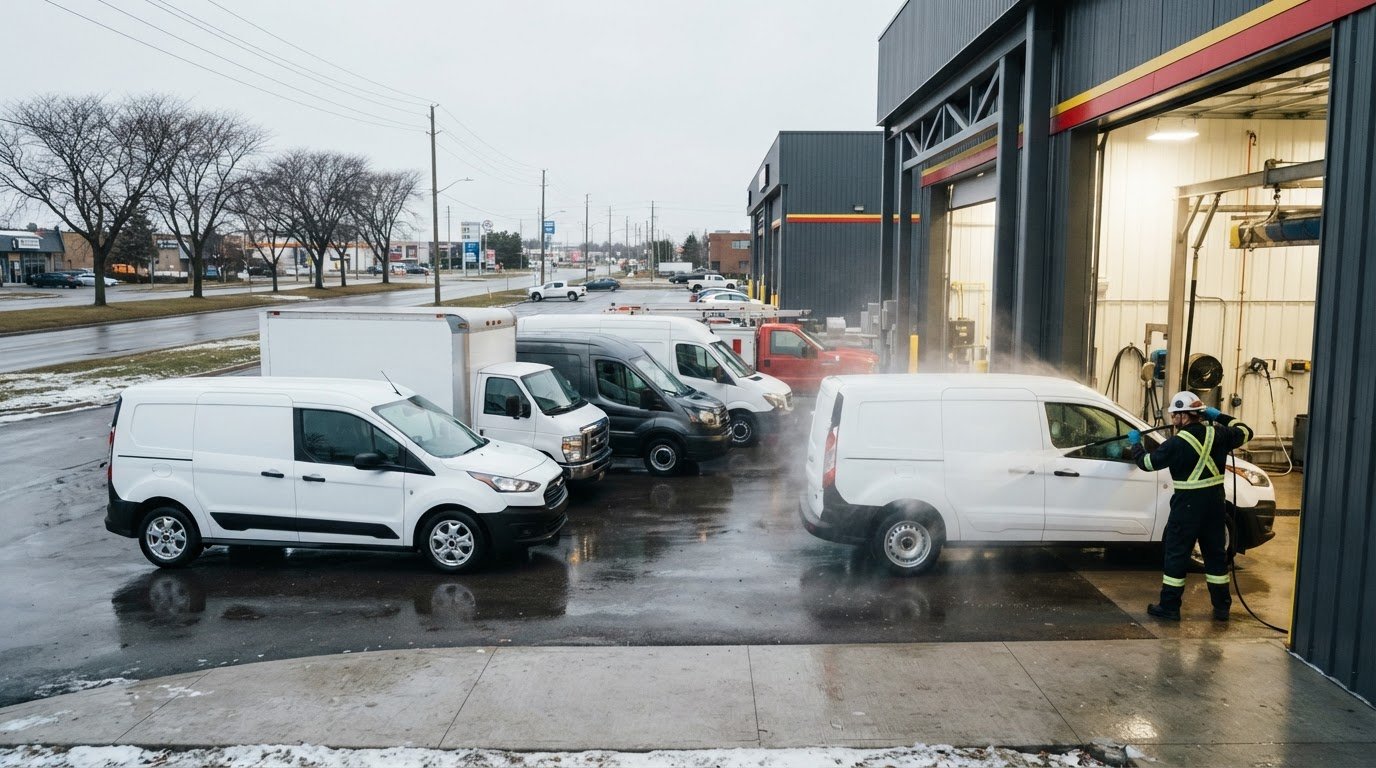
A clean fleet is easier to keep ready for the road. Fleet vehicle cleaning services in Brampton remove dirt, grease and road salt that can wear down vehicle finishes and contribute to corrosion. General commercial trucks are commonly washed every two to four weeks, with the schedule adjusted for road grime, snow and salt exposure.
That schedule is a useful starting point, but every fleet has different vehicles, routes and cleaning needs. A delivery van working city streets may collect different debris from a truck travelling across the GTA, so the right routine depends on how and where each vehicle is used.
This guide explains what fleet washing can involve, which vehicles it can cover and how to plan one-time, seasonal or recurring cleaning. It also outlines practical ways to organize cleaning around vehicle availability and avoid unnecessary washes.
Key Takeaways
- Match the wash routine to each vehicle’s routes, weather exposure and workload, rather than applying one schedule to the whole fleet.
- Plan one-time or seasonal cleaning around heavy grime and road salt, then use recurring washes to keep buildup manageable.
- Consider how clean vehicles affect customer impressions, driver readiness and the visibility of your business branding.
- Identify the vehicle types in your fleet and the cleaning needs that differ between vans, trucks and other commercial vehicles.
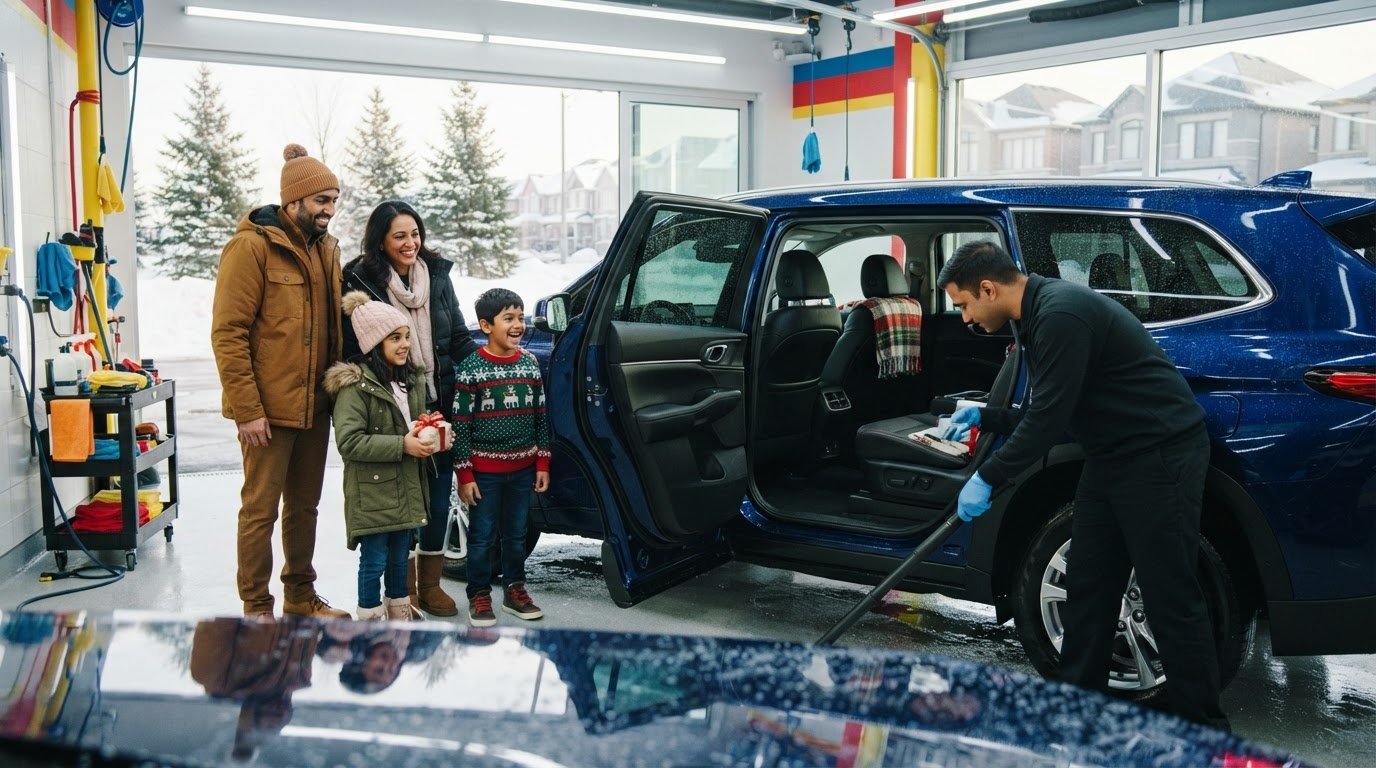
- For personal vehicles, Nanak Car Wash offers Express Car Wash, Full-Service Car Wash and Car Detailing Packages.
What is a fleet wash service?
A fleet wash removes road grime, oil, mud, and salt from work vehicles. Fleet vehicle cleaning services in Brampton can include exterior washing, targeted degreasing, and detailed cleaning, depending on each vehicle’s condition. After one day on the road, vehicles may collect several kinds of debris. Compare local companies by reading reviews, checking their stated service areas, and assessing whether their turnaround fits your operating schedule.
Vehicles and Equipment Washed
Fleet washing can cover trucks, vans, trailers and heavy equipment. The plan depends on each vehicle’s size, surfaces and typical buildup. A delivery van may need attention to its exterior and cab, while a trailer can collect grime across its long sides and rear doors. List the vehicle types before deciding which tasks matter most.
On-site cleaning can take place at yards, depots, warehouses, or job sites. A mobile wash setup can clean parked vehicles where they’re already gathered. Before scheduling work, group units by type and note where they’re parked. Identify areas that need extra attention, such as a truck’s lower panels or a trailer’s rear doors.
Routine Washing for Maintenance and Safety
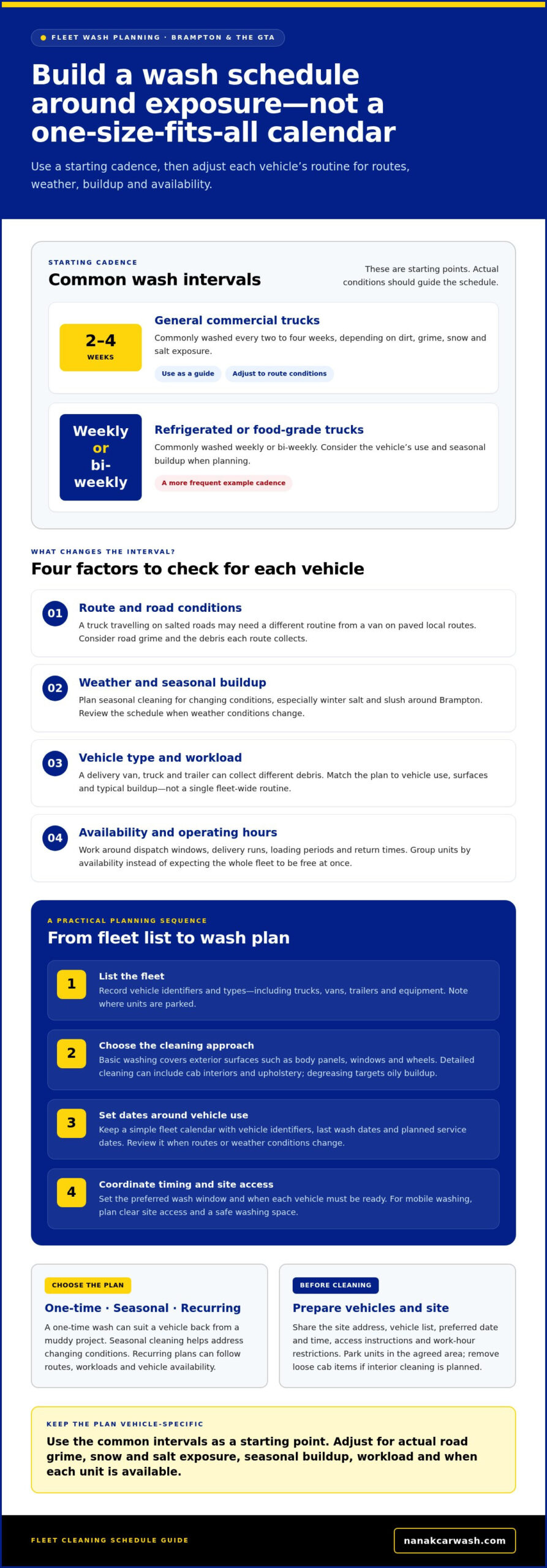
Regular washing helps remove road salt and grime that can damage paint and contribute to corrosion over time. General commercial trucks are commonly washed every two to four weeks, depending on dirt, snow and salt exposure. Refrigerated or food-grade trucks are commonly washed weekly or bi-weekly. Adjust the schedule to actual route conditions and seasonal buildup.
Clean surfaces can also make inspections and repairs easier by improving visibility around vehicle components. Fleet vehicle cleaning services in Brampton can be planned around the grime and residue each route produces. A truck on salted roads may need a different routine from a van on paved local routes. Include undercarriage treatment when corrosion prevention is a priority, and use manual brushing for areas a power washer can’t reach easily.
Basic washing focuses on exterior surfaces such as body panels, windows and wheels. Detailed cleaning gives extra attention to areas like cab interiors and upholstery. Degreasing targets oily buildup, while polishing focuses on the exterior finish. Acid washing is a specialized process for certain stubborn deposits. Match the method to the residue and surface instead of applying every treatment to every vehicle.
A regular wash can improve vehicle efficiency, including through better aerodynamics. Keeping washing on a regular schedule can also help vehicles operate smoothly and safely. Grime buildup may lead to mechanical problems when it is not addressed quickly, so a consistent plan helps manage residue before it accumulates further.
Fleet vehicles can collect grease, asphalt, oil, mud and other debris on the road. General commercial trucks are commonly washed every two to four weeks, depending on exposure to dirt, grime, snow and salt. Use that interval as a guide and adjust the routine to each vehicle’s conditions.
One-time, seasonal, and recurring wash schedules
Choose a wash schedule around vehicle use, seasonal grime and the time each unit is available. Planning ahead helps keep cleaning from disrupting dispatch, deliveries or job-site work.
One-Time, Seasonal, and Recurring Plans
A one-time wash can suit a vehicle returning from a muddy project or a trailer with visible road residue. Seasonal cleaning helps address changing conditions, especially winter salt and slush around Brampton. General commercial trucks are commonly washed every two to four weeks, adjusted for exposure. Refrigerated or food-grade trucks are commonly washed weekly or bi-weekly.
Build a recurring schedule around vehicle routes and workloads. A truck travelling on salted roads may need more frequent washing than a van used for short local trips. Keep a simple fleet calendar with vehicle identifiers, last wash dates and planned service dates. Review it when routes or weather conditions change.
Service Timing and Flexibility
Scheduling around business hours starts with the fleet’s operating pattern. Mark dispatch windows, delivery runs, loading periods, and the times vehicles return to the yard. For after-hours or overnight cleaning, set the preferred window and the time each vehicle must be ready again. A mobile wash plan also needs clear site access and a safe space for washing.
Group vehicles by availability rather than expecting every truck or trailer to be free at once. For example, schedule units returning from morning routes separately from vehicles leaving later. This makes coordination easier and helps limit downtime.
Contracts and Volume Discounts
A recurring plan can set out the schedule, vehicles covered and how changes are handled. Volume discounts aren’t automatic; terms depend on the arrangement, fleet size and washing frequency. Compare the conditions, including which vehicle types are covered and how missed or rescheduled visits work.
Before agreeing to a cleaning plan, list the number and types of vehicles and estimate how often each needs attention. A mixed fleet of trucks, vans and trailers may need different intervals. A clear schedule makes it easier to compare recurring cleaning with one-time projects.
Booking and Preparing Vehicles
To arrange cleaning, prepare the site address, vehicle list, preferred date and time, access instructions and any work-hour restrictions. Include trailers and equipment so the plan covers the full fleet. Identify vehicles that must leave early or remain available for deliveries.
Before cleaning, park units in the agreed area and leave room to reach their exterior surfaces. Remove loose items from cabs if interior cleaning is planned. These steps help keep the work organized and vehicles ready for their next use.
Most mobile detailing services in Brampton take 2-4 hours, depending on the package and vehicle type. Allow that longer appointment to shape vehicle availability and return-to-service planning.
The page lists a basic car wash as taking 10 to 15 minutes, plus the drive there. Factor the trip and wash into a workable gap so a short clean does not conflict with dispatch or other scheduled work.
Fleet cleanliness and brand image
A work vehicle represents its business at customer sites, loading areas, and on public roads. A clean exterior keeps company markings, door details, and vehicle numbers easier to see. For a Brampton contractor arriving at a home, a tidy truck can support a more professional first impression before anyone speaks with the customer.
Dirt can change that impression quickly. Debris buildup can make a fleet nearly unrecognizable after a week, especially when vehicles travel through muddy job sites or busy delivery routes. If customers see the same van or truck repeatedly, visible grime may become part of their impression of the company. A consistent cleaning routine helps keep the fleet’s appearance aligned across vehicles.
Make Branding Easy to Recognize
Check the same areas on every vehicle: doors, side panels, rear doors and company logos. Dust or road film can make names and contact details harder to read. After washing, inspect handles, mirrors, wheel arches and lettering for missed residue. Use one checklist for trucks and vans to keep the fleet looking consistent.
Cleanliness also helps staff identify vehicles and equipment in a busy yard. For example, a dispatcher can spot a unit number more quickly when dirt doesn’t obscure the door. Clear markings can help customers distinguish a company vehicle from other trucks at a shared loading area. Apply the same visual standard to branded and unbranded units.
Match Cleaning to the Work
Different routes leave different marks. A landscaping truck may return with soil around its lower panels, while a delivery van may collect road film on its rear doors. Focus first on the areas customers see, then address the rest of the exterior. Before a vehicle returns to customer-facing work, inspect its wheels, steps and lower body.
Mobile service can make cleaning easier to coordinate at a yard or work location, where several vehicles are already parked. Set a practical standard: clean windows, visible logos, door handles, and exterior panels. Then check the finish under normal daylight, because streaks or missed patches can be less obvious under indoor lighting. A reliable routine means staff know what “ready for the road” looks like.
After each cleaning, confirm the vehicle identity, inspect customer-facing surfaces and note any remaining buildup. This helps managers spot patterns, such as repeated grime on one route or residue around trailer doors. The result is a more consistent fleet image without treating every vehicle as though it faces the same conditions.
Types of commercial vehicles cleaned
A commercial fleet can include vehicles with different shapes, materials and work demands. Match the cleaning method to each unit instead of treating every vehicle like a passenger car. A Brampton delivery operation, for example, may include cargo vans, box trucks and trailers with different exterior and interior needs.
Trucks, Vans, and Trailers
Trucks range from pickups to larger work vehicles with broad panels, steps, mirrors and wheels. Vans often need attention around sliding doors, handles, windows and cargo-area floors. Trailers have long side panels and rear doors that collect road film. Inspect these surfaces to identify where washing should focus.
For a mixed fleet, record each vehicle type and its main use. A delivery van may need a tidy cab and cargo space, while a trailer used on construction routes may need exterior grime removed. This inventory helps organize the work and clarify priorities.
Specialized Work Vehicles and Equipment
Commercial vehicles also include refrigerated trucks, buses, refuse vehicles and construction equipment. Their shape and use affect where residue collects. A refrigerated unit may need close attention to exterior panels and door edges, while a loader can carry soil around its wheels and lower frame. Choose cleaning methods based on the surfaces and debris involved.
For heavy equipment, identify sensitive areas before washing. Wiring, electronics, seals and moving parts need careful handling. Note these areas in the cleaning instructions, then separate tasks such as exterior washing from cab cleaning. This helps keep the work controlled across varied equipment.
Interior and Exterior Cleaning Needs
Exterior washing removes visible buildup from body panels, wheels, windows and steps. Interior cleaning addresses cab floors, seats and touch points. Upholstery needs a different approach from a rubber cargo mat, so specify the material and type of dirt. Dust in a van cab, for example, calls for different attention than mud on a truck’s lower panels.
Build a simple vehicle checklist with type, surface, and cleaning priority. Include door seals, mirrors, wheel areas, and cab interiors where relevant. A mobile truck wash may suit units parked at a yard, while detailed cleaning can address interiors or stubborn residue. Clear instructions help match the task to the vehicle.
In Brampton, wastewater handling depends on site drainage and where wash water flows. Keep runoff containing soap, oil, grease or sediment out of storm drains; contain it and route it through an appropriate wastewater system.
Fleet cleaning across Brampton and the GTA
Brampton fleets often work across several GTA locations, so route patterns matter as much as vehicle condition. Plan cleaning around the yard, work sites and roads each unit travels.
Available Fleet Cleaning Services
Fleet cleaning in Brampton can include exterior washing, interior cab cleaning, degreasing and detailed work for stubborn residue. The right scope depends on vehicle type and use. A delivery van may need clean windows and cargo surfaces, while a construction truck may need focused removal of mud and grease.
For routes that extend into Toronto or Mississauga, group vehicles by parking location and return time. This helps organize a cleaning visit around where units are already available. Ask for the service area and cleaning tasks to be set out clearly, especially when a fleet includes trucks, trailers, and specialized equipment.
Keep the fleet consistent across locations with the same basic inspection list: visible exterior panels, windows, wheels and customer-facing markings. Add interior or targeted cleaning when a vehicle’s work leaves residue in its cab or cargo area. This makes it easier to compare completed work across GTA sites.
Pricing by Vehicle or Visit
Cleaning costs vary with vehicle size, fleet size, soil level, scope and site access. A truck with heavy grease buildup requires different work from a lightly soiled van. Define the vehicles and tasks first to understand what a cleaning plan needs to cover.
To compare per-vehicle and per-visit pricing, prepare the fleet list and location details first. Note which vehicles need basic washing, interior attention or specialized residue removal. Compare the listed tasks and visit frequency, not just the billing format. This gives your Brampton team a clearer picture of what each arrangement covers.
Before arranging work across the GTA, map fleet locations and typical return windows. For example, units returning to a Brampton depot can be grouped separately from vehicles ending their routes in Toronto. Share vehicle types, site access details and priority cleaning needs when planning the work. Clear information helps define a practical scope without adding unnecessary tasks.
For individual vehicles between fleet cleaning visits, explore vehicle cleaning options.
Nanak Car Wash: Car Detailing Packages
Nanak Car Wash offers Brampton drivers practical options for keeping personal vehicles clean between fleet cleaning visits. Choose Car Detailing Packages for more comprehensive cleaning, or a Full-Service Car Wash for a thorough inside-and-out wash. Express Car Wash Packages and the Unlimited Wash Club suit drivers looking for an express wash or recurring wash option.
These services clean individual vehicles rather than provide a mobile fleet-washing program. For a company vehicle that needs cleaning, choose the option that fits its condition and your routine. Nanak Car Wash offers choices for both detailed cleaning and regular washing.
Visit nanakcarwash.com to explore the available services.
Make Your Next Cleaning Decision Simple
Turn your fleet plan into a clear upkeep process. Assign responsibility for tracking vehicle condition, noting cleaning priorities and keeping each unit ready for its next route. A practical routine helps address grime before it distracts drivers or customers. For individual vehicles, Nanak Car Wash offers Car Detailing Packages, Full-Service Car Wash Packages and Express Car Wash Packages.
Use the same straightforward approach when choosing fleet vehicle cleaning services in Brampton: match the work to your vehicles and operating needs. Keep fleet requirements distinct from personal-car cleaning so each decision fits the service being considered.
Contact Nanak Car Wash about its vehicle-cleaning options and take the next step toward a cleaner routine.
Frequently Asked Questions
How often should fleet vehicles be washed?
General commercial trucks are commonly washed every two to four weeks, with the interval adjusted for dirt, snow and road salt exposure. Refrigerated or food-grade trucks are commonly washed weekly or bi-weekly. For other vehicles, review route conditions and visible buildup regularly. A van travelling paved local routes may need a different schedule from a truck repeatedly entering muddy job sites.
Why is regular fleet washing important?
Regular washing removes road salt, grease and grime that can harm paint and contribute to corrosion over time. Clean surfaces also make vehicle details easier to see during inspections or repairs. Residue on a truck, for example, can obscure visible issues. Keeping windows, lights and identifying marks clean supports visibility and a consistent appearance on customer routes.
What types of fleet vehicles do Brampton cleaning services handle?
Fleet cleaning can cover trucks, vans, trailers, refrigerated vehicles and heavy equipment. Before arranging work, make an inventory by vehicle type and note distinctive areas, such as a van’s cargo space, a trailer’s rear doors or equipment with exposed wiring. This helps define the cleaning scope and identify surfaces needing careful handling. Include vehicles with different uses, not just the most visible units.
What cleaning methods and interior or exterior services are included?
Methods can include exterior washing, interior cleaning, degreasing, polishing and undercarriage treatment. Manual brushing can reach areas a power washer may miss or where extra care is needed. Take care around wiring and electronics to avoid damaging critical components. Specify whether the priority is exterior residue, cab upholstery or the underside, then match the method to the surface and buildup.
How do Brampton fleet cleaning companies compare by reviews, service area, and turnaround time?
Read customer reviews, check each company’s stated service area, and compare whether its turnaround fits your operating schedule.

 6600 Finch Ave W, Etobicoke, ON M9V 3Z6

 647-703-8515
 MON – SUN 8 AM to 7 PM