
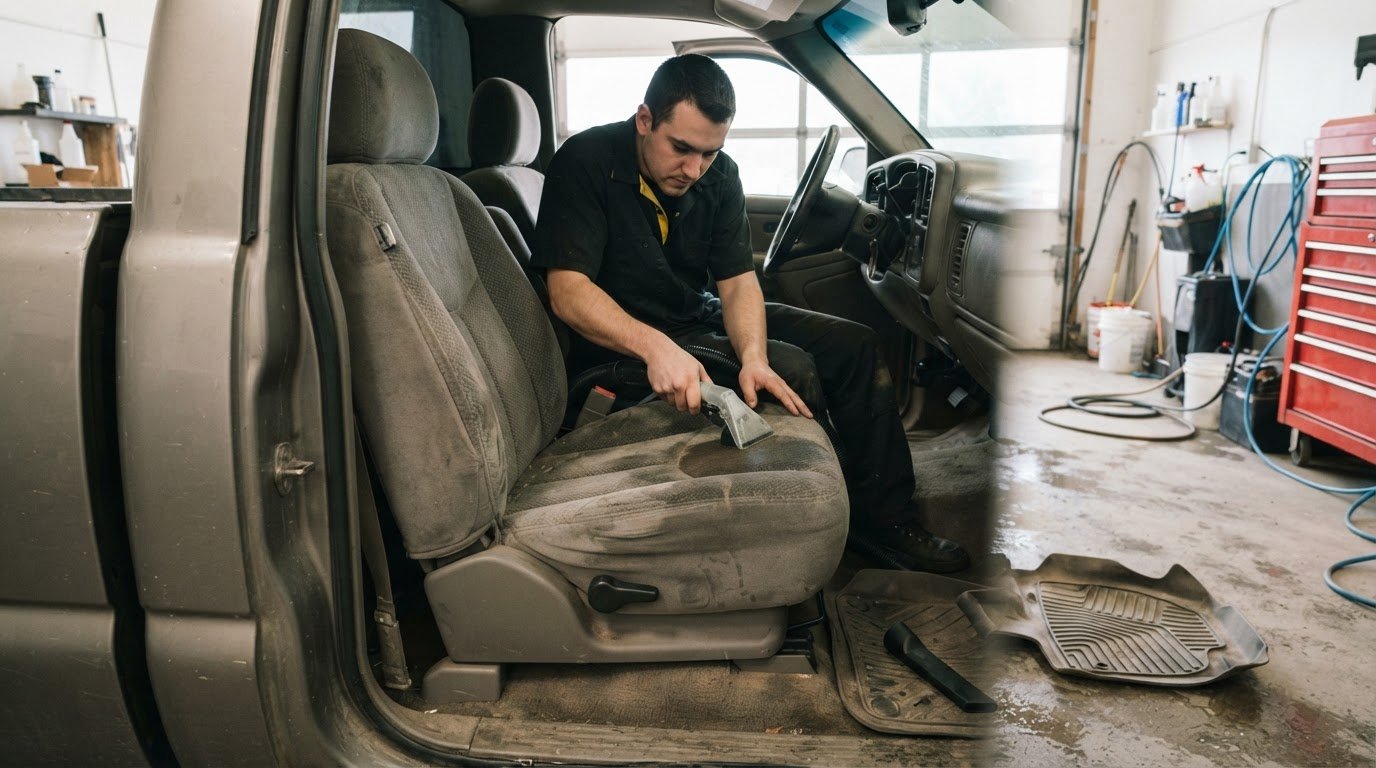
A work truck interior needs more than a quick pass with a vacuum. Getting a work truck interior professionally cleaned means removing the floor mats, clearing debris from carpets and crevices, and cleaning seats and hard surfaces with methods suited to their materials. A deep clean is recommended about once per month.
It makes sense to want a clean, comfortable work-truck cab without spending time on trial-and-error cleaning or worrying about different surfaces. Getting a work truck interior professionally cleaned means a detailer can tackle dirt and buildup that a quick tidy often misses.
An interior detail can include vacuuming and shampooing carpets and floor mats, cleaning seats and hard surfaces, and addressing dirt in tight spaces. Nanak Car Wash offers Car Detailing Packages with interior cleaning that can include vacuuming, seat and carpet shampooing, and leather deep-cleaning. The right service depends on the cab’s condition and how the truck is used.
Key Takeaways
- Professional cleaning covers more than visible dirt: mats, seat surfaces, carpets, and hard-to-reach crevices all need attention.
- The right seat-cleaning method depends on whether the upholstery is cloth, leather, or vinyl.
- A deep interior clean is recommended about once per month, with the truck’s use and condition helping guide the schedule.
- Removing loose rubbish and clutter first helps detailers reach more of the cabin during cleaning.
- For a more thorough interior refresh, explore a car detailing package from Nanak Car Wash.
Professional cleaning of work truck seats and floor mats
A professional works from the dirtiest contact points outward, choosing a method for each surface. Seat fabric, floor mats, embedded grit, and the truck’s cleaning location all affect the process.
-
How professionals clean work truck seats
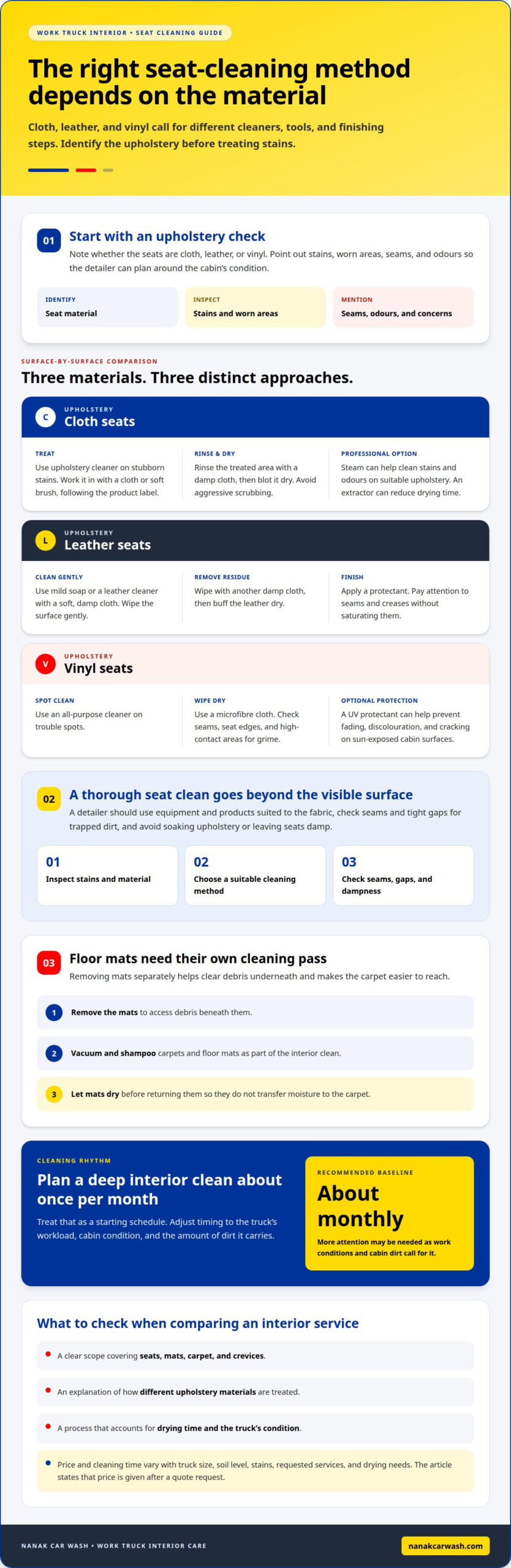
Identify the seat material and inspect stains before applying a cleaner. For upholstery, a steam cleaner can help remove odours, stains, and bacteria; an extractor can reduce drying time. The detailer should use equipment and cleaning products suited to the fabric, rather than soaking it. Check seams and tight gaps for trapped dirt, and avoid leaving the seat damp.
-
How professionals clean work truck floor mats
Removing and cleaning floor mats separately helps clear debris from underneath and lets the carpet be reached. Nanak Car Wash’s detailing service includes vacuuming and shampooing carpets and floor mats. Make sure mats are dry before returning them to the truck so they do not transfer moisture to the carpet.
- Ask what the interior service includes before choosing a package. Nanak Car Wash’s Car Detailing Packages cover interior cleaning, including vacuuming and shampooing seats and carpets; leather deep-cleaning and pet-hair removal are available at extra cost. Compare the listed tasks with the areas that need attention rather than relying on the word “detailing” alone.
- Account for the setting. Mobile detailing brings the service to the truck’s location, which can reduce travel and downtime. Shop-based cleaning takes place at a dedicated location, where equipment and workspace are arranged for the job. The better fit depends on where the truck can be cleaned and how the service handles water, equipment, and access to the cabin.
- Consider practical health, safety, and environmental factors in Canada. Cleaning products should be used according to their label directions, while ventilation and the handling of used water or residue matter to the worksite. Applicable requirements can depend on location and cleaning method. These details help distinguish a thorough process from simply applying cleaner and wiping visible surfaces.
- Compare cleaning providers by the details of the work, not just the service name. Look for a clear scope covering seats, mats, carpet, and crevices, plus an explanation of how different upholstery materials are treated. Ask how the process accounts for drying time and the truck’s condition. Price depends on the truck’s size, soil level, stains, and requested services; it’s given after a quote request. Cleaning time also varies with those factors and the drying needs of the materials.
Professional cleaning of cloth, leather, and vinyl seats
Seat material determines the cleaner, tools, and finishing steps. A detailer should identify the upholstery before treating stains or applying protectant.
- Before booking, note whether the seats are cloth, leather, or vinyl, and identify stains, worn areas, seams, and odours. Tell the detailer what needs attention so the work can be planned around the cabin’s condition. Different surfaces may need different cleaning approaches.
- Treat cloth seats with upholstery cleaner where stubborn stains remain. Work the cleaner into the stain with a cloth or soft brush, following the product label directions. Rinse the treated area with a damp cloth, then blot it dry. Avoid aggressive scrubbing, which can spread a stain or roughen the fabric. A detailer can use steam on suitable upholstery to help clean stains and odours.
- Clean leather with mild soap or a leather cleaner and a soft, damp cloth. Wipe the surface gently, then use another damp cloth to remove cleaner residue. Buff the leather dry and apply a protectant. Focus on seams and creases without saturating them. This sequence removes surface soil while keeping the cleaning method distinct from cloth-seat treatment.
- Use an all-purpose cleaner on trouble spots in vinyl seats, then wipe the surface dry with a microfibre cloth. Check seams, seat edges, and high-contact areas for grime. Keep the cleaner on the vinyl rather than letting it pool between panels. A UV protectant can help prevent fading, discolouration, and cracking on cabin surfaces exposed to sunlight.
- Describe odours, stains, or visible mould before the cleaning begins. Professional detailing can treat stains and odours with methods suited to the upholstery; steam can help clean suitable fabric surfaces. Cleaning visible mould from a seat doesn’t address the moisture source, so the underlying dampness must also be dealt with. A detailer can choose a surface-specific process rather than treating every mark alike.
- Review the finished seats for cleaner residue, damp patches, and untreated marks. Cloth should be blotted dry after rinsing, leather should be buffed and protected, and vinyl should be wiped dry. These material-specific checks help ensure the final steps match the seat surface. For a full cabin refresh, a car detailing package can bring seat cleaning into a broader interior service.
Recommended cleaning frequency
Plan a professional deep clean about once per month. Adjust the timing to the truck’s workload, cabin condition, and the amount of dirt it carries.
- Use a monthly deep clean as the starting schedule. Work trucks collect dust, crumbs, mud, and residue through regular use. A consistent appointment helps prevent those deposits from building up across seats, carpets, and other interior surfaces. Treat the monthly interval as a practical baseline, then adjust it when the truck’s working conditions call for more attention.
- Consider the work the truck does each day. A cab exposed to muddy roads, dusty sites, material dust, or food debris may need more frequent attention than one used mainly for commuting. Let the condition of the interior guide your cleaning schedule.
- Base your next booking on visible buildup as well as routine upkeep. Look for debris around seat seams, marks on high-contact surfaces, and dirt trapped in carpet. A strong odour or persistent stain may mean the interior needs more than a quick wipe.
- Keep quick tidying separate from deep cleaning. Removing rubbish and wiping a spill can help maintain the cab between professional appointments, but it doesn’t replace a full interior service. A deep clean can address the areas routine tidying misses, including accumulated soil in tight spaces and material-specific cleaning needs on seats.
- Book around the truck’s working schedule. Choose a time when the vehicle can be cleaned without disrupting a planned job or route. Factor in the condition of the interior and the drying needs of materials such as cloth. This makes it easier to plan the return to regular use after the detailer finishes.
- Reassess the schedule after each deep clean. If the cab quickly collects dirt again, shorten the gap before the next booking. If it stays tidy with basic upkeep, keep the monthly baseline and review the condition before each appointment. Let the actual pattern of work and interior soil guide the decision.
- Include special issues in the booking plan. A spilled drink, persistent odour, or visible mould may need focused treatment rather than waiting for the next routine appointment. Tell the detailer what happened and where it occurred, so the cleaning approach can suit the affected surface. Address moisture sources as well as visible marks.
As part of each deep-clean appointment, leave the carpet until the rest of the vehicle interior has been cleaned. Debris can fall onto the floor during that work, so vacuuming the carpet afterward helps remove what has landed there. This order gives the carpet a final pass once cleaning above and around it is complete. When arranging the service, ask the detailer to finish with the floor, rather than vacuuming it first and allowing later cleaning to leave fresh debris behind. Include this final step in the routine so the appointment addresses both the surfaces cleaned earlier and anything that has dropped onto the carpet.
How detailers remove trash and clutter
Clearing loose items gives the detailer access to surfaces, storage areas, and floor space. A quick interior tidy can take about 10 minutes and include removing rubbish, wiping surfaces, and vacuuming crumbs.
- Before the appointment, remove rubbish and separate it from personal or work items. Put cups, wrappers, and empty packaging in a rubbish bag, and set aside work documents, tools, and personal belongings. This clears the cabin without risking useful items being mistaken for waste.
- Check the storage spots where small rubbish collects. A detailer can inspect cupholders, door pockets, seat pockets, and the centre console for receipts, wrappers, and crumbs. Remove loose items before wiping those areas. Emptying these spaces also makes it easier to reach corners and edges that a quick surface wipe could miss.
- Set aside loose objects that belong in the truck but obstruct cleaning, such as a charger, water bottle, or paperwork. Keeping them together in a safe, visible place clears the seats and surfaces without treating work equipment or personal belongings as rubbish.
- Bag rubbish as it is removed instead of placing it on another seat or floor area. A designated rubbish bag keeps wrappers and food debris contained while the detailer works through the cab. For recurring waste, drivers can keep a rubbish container or bag inside and take it with them at stops.
- Look for crumbs and residue beneath removed clutter. A wrapper can conceal crumbs, while a drink container can leave a sticky ring in a cupholder. The detailer should clear the loose debris before wiping the affected surface. This keeps rubbish from spreading and lets the next cleaning step reach the actual mark.
- Keep the removal stage focused on access, not on deep-cleaning every surface. The roughly 10-minute quick-clean example covers rubbish removal, surface wiping, and crumb vacuuming; a full detail can involve additional work. Separating these tasks helps set clear expectations about what a basic tidy achieves and what needs a deeper cleaning process.
- Finish by checking the cleared areas before moving on. Confirm that visible rubbish is bagged, belongings are set aside, and seats and floor spaces are accessible. This final pass catches a receipt in a door pocket or a wrapper beside the console. With clutter out of the way, the detailer can clean exposed surfaces more thoroughly.
How professionals vacuum carpets and crevices
Detailers remove loose job-site debris with a vacuum and treat grease, oil, and mud separately. They work in stages so later cleaning doesn’t leave fresh debris on finished surfaces. Detailed vacuuming is an important part of getting a work truck interior professionally cleaned because grit can collect beneath seats and around fittings.
- Start with a pass through the cabin before wiping surfaces. Vacuuming first helps prevent dust raised during vacuuming from settling onto surfaces already cleaned. Use suitable attachments to reach open floor areas and accessible gaps around seats. This pass lifts loose grit, crumbs, and dry job-site debris before other cleaning begins. It also helps reveal marks that need separate treatment.
- Remove the floor mats and vacuum beneath them. Dirt often sits where a mat meets the carpet, especially in the driver’s footwell. Clean the exposed carpet rather than pushing grit toward the edges. Keep each mat separate during this stage, so debris doesn’t fall back onto the cabin floor. Check the exposed area for small stones or packed soil.
- Work along seat rails, seams, and console edges with a narrow vacuum attachment. These tight spaces collect crumbs, dust, and small pieces of work-site debris. Move the nozzle slowly and change its angle to reach around fittings. Avoid forcing an attachment against delicate trim or pulling loose upholstery threads. A careful pass can remove particles a wide nozzle misses.
- Separate dry debris from greasy or oily residue. A vacuum collects loose particles, but it won’t remove a sticky oil mark from carpet. Getting a work truck interior professionally cleaned also involves treating such spots with a cleaner suited to the affected material, then removing the loosened soil appropriately. This keeps stain treatment distinct from vacuuming and avoids spreading residue.
- Address mud based on whether it’s loose or stuck to the carpet. Vacuum dry, loose soil first, then treat remaining marks with a suitable cleaner. Work from the outer edge toward the centre to limit spreading. Avoid grinding mud into carpet fibres with a stiff tool or heavy pressure. Detailers can then reassess the area before moving to another section.
- Clean the rest of the interior before the final carpet pass. Wiping or treating seats and other surfaces can send crumbs or loosened dust onto the floor. Vacuum the carpet again afterward, following its edges and the driver’s footwell. This second pass catches debris that fell during other cleaning stages, rather than leaving it under the mats.
- Finish with a close inspection of the floor and crevices. Check beneath seat edges, around pedals, and beside the centre console for remaining grit or debris. Revisit missed areas with the vacuum before replacing the mats. A focused final pass helps remove loose particles from the work truck and leaves the carpet ready for regular use.
Nanak Car Wash
Nanak Car Wash is a natural next step when your work truck needs professional cleaning. Its vehicle-cleaning options include Car Detailing Packages and Full-Service Car Washes, with Express Car Wash and Unlimited Wash Club options for routine exterior care. Choose a detailing service when you want a more complete vehicle clean, or a wash option for regular upkeep. A clean cab can make daily work more comfortable and help keep dirt from building up between deeper cleans. The right choice depends on the cleaning your truck needs and how you use it. For a professional cleaning option, contact Nanak Car Wash.
Make a cleaning plan that fits your workday
Make cab care part of your regular vehicle planning, not an afterthought. Choose a time when the truck can be cleaned without disrupting scheduled work, and note any new stains or odours for the next service. A simple plan helps you decide when a quick wash is enough and when the interior needs more attention. Getting a work truck interior professionally cleaned can be a practical step toward a tidier, more comfortable cab.
Nanak Car Wash offers Car Detailing Packages, Full-Service Car Wash, and Express Car Wash options for different vehicle-cleaning needs. Consider which service best fits the work your truck needs now, then make a plan for keeping it in shape.
Contact Nanak Car Wash to take the next step. A cleaner cab can make the start of your next workday feel that much better.
Frequently Asked Questions
How much does professional work truck interior detailing cost in Canada?
The price depends on the truck’s size, interior condition, and cleaning scope. A cab with heavy soil, stubborn stains, or extensive seat and carpet treatment may need more work than a lightly used interior. The price is provided after a quote request. Describe the truck’s condition and the areas needing attention so the requested service can be considered accurately.
How should I prepare a work truck for interior detailing?
Before the appointment, secure valuables and work documents, and describe any problem areas, such as an oil mark, drink spill, or persistent odour. Mention whether the seats are cloth, leather, or vinyl if you know. These details help the detailer focus on the parts of the cab that need attention.
How often should a work truck interior be professionally cleaned?
A professional deep clean is recommended about once per month. Adjust the schedule to the truck’s workload and how quickly dirt, spills, or odours build up. A truck used on dusty or muddy sites may need an earlier appointment than one used in cleaner conditions. Consider a focused clean after a significant spill rather than waiting for the routine booking.




 6600 Finch Ave W, Etobicoke, ON M9V 3Z6

 647-703-8515
 MON – SUN 8 AM to 7 PM