
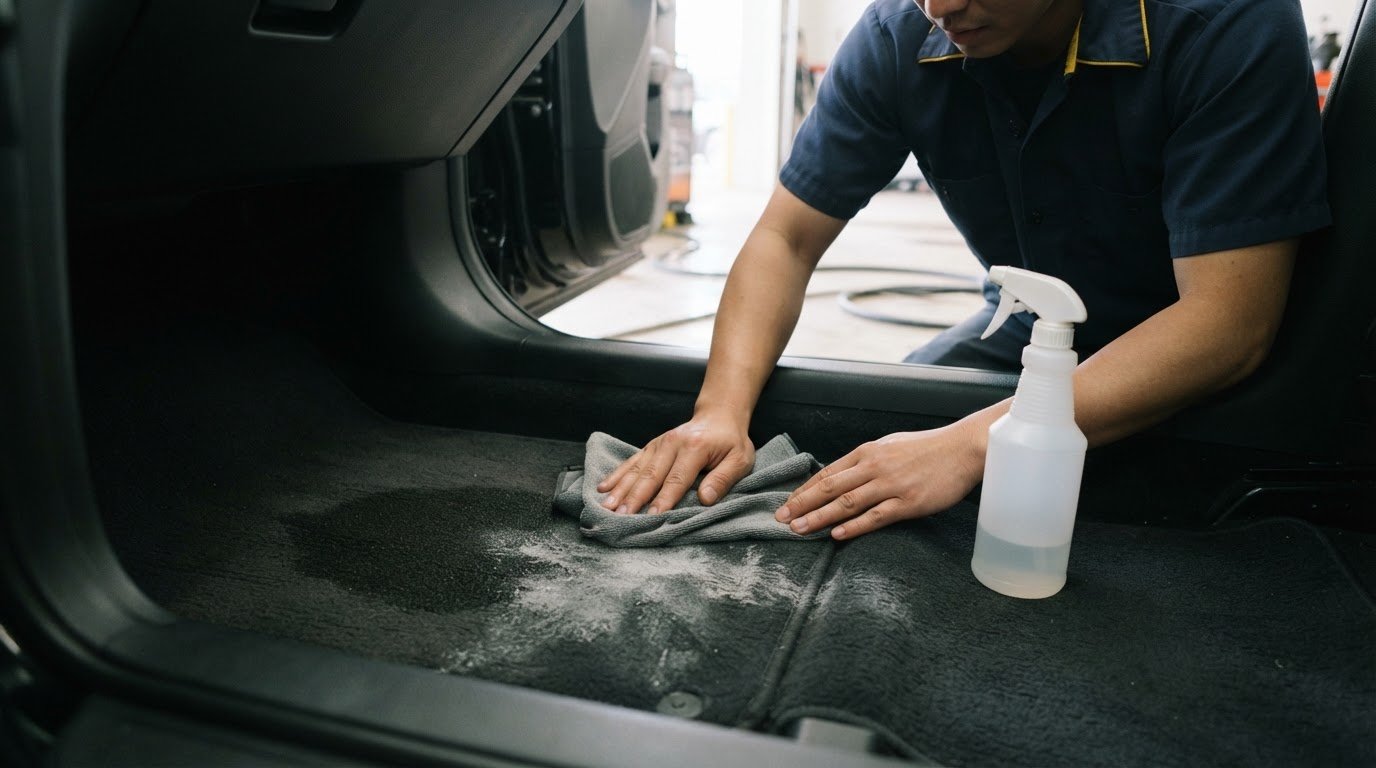
A white road-salt mark can keep affecting carpet fibres after the surface looks dry. For heavy duty road salt stain removal from carpets, vacuum away loose residue, apply a mix of one part white vinegar and two parts lukewarm water, wait 5 to 8 minutes, then blot. Use only enough liquid to treat the stain, since over-wetting can lead to residue returning or damage fibres.
It’s frustrating when a pale mark survives a quick clean or reappears after the carpet dries. The key is to lift the dried salt without soaking the carpet, then blot away loosened residue and, if needed, rinse with clean water.
This guide explains how to treat dried white salt marks, tackle darker winter grime and dry the area to help prevent stains from returning. You’ll also learn when a stain may need professional equipment, particularly if brine has spread over a large area or the carpet needs delicate care.
Key Takeaways
- Identify whether a pale mark is dried salt or mixed winter grime before choosing a cleaning approach.
- Lift loose residue first, then treat dried white marks carefully and blot rather than scrub.
- Use minimal moisture to help prevent stains from wicking back as the carpet dries.
- Recognize when a large area of winter brine or delicate carpet fibres calls for professional cleaning.
- Learn how gentle agitation, extraction and clean-water rinsing can help remove loosened residue.
Need Professional Equipment to Deal with Winter Salt Stains?
- Inspect the mark in bright light before adding moisture. Dry, white crystals often indicate salt or ice-melt residue, while grey or brown marks may include tracked-in soil. A dark, greasy patch could contain road grime mixed with winter residue. These are useful clues, but they can’t identify the exact chemical. In Canada, more than five million tonnes of road salt and other ice melters are spread each year.
- Check around the visible stain, not just its centre. Calcium chloride and magnesium chloride are alkaline compounds found in salt and ice-melt products, and they can leave white residue when dry. A pale outline beyond the main mark may show where dissolved residue travelled as moisture evaporated. Note the stain’s shape and spread before cleaning. A broad mark or one that keeps returning may need more than a quick surface treatment.
- In Toronto, winter stains can form when boots bring sidewalk salt, slush and grit indoors. Snow melts near entrances, leaving dissolved salt behind as the water dries. Parking-area grime can mix with the moisture and create a darker mark. Where possible, distinguish the patterns: a white, powdery deposit suggests dried salt, while a dark track may include soil or oily road film. Mixed stains may need separate cleaning steps.
- Keep dry residue dry until you can remove loose particles. Use a vacuum with a suitable carpet attachment, moving slowly over the spot. Don’t grind crystals into the pile with a shoe or brush. If only loose residue is present, vacuuming may reduce what later cleaning needs to lift. For stubborn deposits, widespread staining or marks that return after cleaning, extraction equipment can help remove dissolved residue.
- Prevent new marks at Toronto entrances by placing a sturdy mat where boots first meet the carpet. Remove outdoor footwear before walking through carpeted rooms, and vacuum tracked-in grit promptly. Shake or clean the entrance mat when salt builds up, so each trip indoors doesn’t spread more residue. In wet weather, keep slushy footwear off the carpet until it can drain. These steps help reduce white deposits and dark winter tracks.
- Choose equipment based on the stain, carpet and affected area. A household vacuum can remove dry particles, but it can’t extract dissolved residue from wet pile. For heavy duty road salt stain removal from carpets, cleaning may involve treatment, gentle agitation and extraction or a clean-water rinse. Avoid soaking the carpet: excess moisture can carry residue deeper or toward the edges. Use professional equipment if the stain spreads, resists careful treatment or repeatedly reappears.
Removing dried white rock-salt residue
Mix one part white vinegar with two parts lukewarm water, then apply it sparingly. Wait 5 to 8 minutes, blot the area, and finish with a clean-water rinse and dry towel.
-
Treat Residential Carpet Salt Stains
Vacuum the dried patch first, using slow passes to collect loose crystals. Dampen a clean white cloth with the vinegar solution, then blot from the stain’s outer edge toward the centre. Check the cloth as you work: a white transfer shows residue lifting. Don’t rub, as this can spread the stain through the carpet pile.
-
Avoid Leaving Salt Residue Behind
Apply only enough solution to dampen the stained fibres, not soak the carpet backing. After the 5 to 8 minute wait, blot with a fresh cloth, then use a separate cloth lightly dampened with clean water. Blot again to pick up loosened salt and vinegar. Avoid pouring water directly onto the carpet, since excess moisture can carry residue deeper.
- Work in small sections if the white mark covers a larger patch. Treat one section with the diluted vinegar, wait 5 to 8 minutes, then blot before moving on. This lets you control moisture and see where salt remains. Use fresh cloth areas as they collect residue. If the pile still feels damp, press a dry towel firmly against it.
- Dry the treated area promptly with a clean towel. Press down to absorb moisture, replacing the towel when it becomes wet. Don’t scrub or use heat to speed drying, as either can affect carpet fibres. Keep foot traffic off the patch while it dries. Check the carpet once dry; lingering white marks can mean residue remains.
- Treat a returning stain by addressing what has moved up through the carpet as it dries. Reapply the diluted solution sparingly, blot, and rinse with a lightly damp clean cloth. Then cover the patch with a 1 inch pad of white paper towels for 12 to 24 hours. Remove the towels and inspect the carpet after it dries.
- Stop repeating home treatments if the stain keeps returning after careful blotting and drying. Adding liquid again and again can spread dissolved salt and leave more moisture in the carpet. Note where the stain is and whether it returns at the same edge or centre. This pattern can help distinguish surface residue from salt moving up as the carpet dries.
When to call a professional carpet cleaner
Vinegar and water can loosen salt residue, but the solution isn’t right for every carpet. Fibre type, dye and moisture exposure all matter, especially with wool or delicate pile.
- Call a professional when winter brine covers more than 10 square feet. A larger soaked area can hold dissolved salt beyond the carpet’s surface, making repeated spot treatment less effective. Professional extraction can remove moisture and loosened residue across the affected section. This is especially useful when the stain reaches several connected areas or extends beyond an entrance mat.
- Identify wool before applying a salt-reducing cleaning solution. WoolSafe advises keeping cleaning products used on wool between pH 4.5 and 8.5. Choose a product within that range and follow its label, rather than assuming a household acid or alkaline cleaner suits the fibre. Blot first, and avoid aggressive scrubbing that can roughen wool pile or spread the mark.
- Protect delicate fibres such as viscose from wet cleaning. Viscose can lose up to half its strength when wet, so heavy scrubbing and excess liquid can stress the carpet. Stop home treatment if the fibres feel fragile, colour transfers to a cloth or the pile changes as you blot. A cleaner can choose a method suited to the material and stain.
- Use a salt-reducing cleaning solution for winter residue, then remove the loosened material. Apply it as directed, work gently across the affected fibres, and extract or rinse with clean water. Cleaner or dissolved salt left behind can form fresh residue as the area dries. On commercial carpet, treat the full traffic path, not only the most visible white spot.
- Choose low-moisture cleaning when cold weather makes long drying times difficult. Using less water can help limit drying time while treating winter salt stains. This approach may suit commercial spaces where damp carpet would disrupt regular use. Match the method to the carpet construction and amount of brine rather than using more liquid to force a faster result.
- Handle carpet and hard-floor cleaning separately in commercial areas. Salt residue can leave a sticky film on hard flooring that attracts dirt and causes rapid re-soiling. The cleaning method must suit the surface; carpet extraction equipment isn’t a substitute for hard-floor cleaning. If a site has both carpet and hard flooring, identify each stained surface before choosing a treatment.
- Stop and seek professional cleaning if stains return after careful treatment, cover a large area or affect delicate fibres. Repeated wetting can push residue deeper and prolong drying, particularly in winter. Note whether the mark is white salt, dark grime or both. This helps a cleaner choose an appropriate solution, level of agitation and extraction method.

Carpet pre-treatment, agitation, extraction and rinsing
- Prepare the area before applying a cleaning solution. Vacuum loose grit and visible crystals, then inspect the carpet pile. Identify whether the mark looks like white salt, dark winter grime or both. Mixed soil may need separate treatment. Keep the work area small so you can control moisture and track how residue lifts.
- Apply a salt-reducing solution according to its product directions. Use a measured amount on the affected fibres rather than pouring it across the carpet. Let the pre-treatment work for the time stated on its label. Don’t add another cleaner at the same time. Combining products can make it harder to tell which treatment loosened the salt or contributed to a remaining mark.
- After pre-treatment, agitate gently with a soft brush or clean cloth. Work across the pile with short strokes instead of scrubbing hard in one spot. For example, loosen a white mark near a doorway without pushing the solution into surrounding fibres. Stop if colour transfers or the pile changes. Aggressive agitation can spread grime and roughen delicate fibres.
- Extract the loosened solution and residue before the carpet dries. Use suitable carpet-extraction equipment, making controlled passes over the treated area. Extraction removes liquid carrying dissolved salt instead of leaving it in the pile. Don’t flood the carpet to make the machine work harder. Excess moisture can spread residue and extend drying time, especially during a cold Canadian winter.
- Rinse with clean water if extraction alone leaves cleaner or salt behind. Apply a small amount of clean water, then extract it or blot with a fresh, absorbent cloth. The rinse should remove remaining cleaning solution without soaking the backing. Check the cloth as you work: visible residue means material is still lifting from the carpet.
- After rinsing, blot the spot with a dry towel and steady pressure. Move to a clean section of the towel as it absorbs moisture. Don’t rub the carpet or leave a wet cloth sitting on the pile. Check the edges, where dissolved residue may remain after treatment. Keep foot traffic off the damp spot until the fibres are dry.
- Inspect the carpet once dry before deciding whether it needs another treatment. Look for a pale outline, stiffness or a returning white mark. These signs may point to remaining residue, not a need for more scrubbing. Repeat the controlled pre-treatment, gentle agitation and extraction sequence only if residue remains. For a large or recurring stain, professional extraction can remove residue more evenly.
Effects of salt residue on carpet fibres and flooring
- Check the carpet fibres for changes beyond the visible white mark. Untreated winter salt residue can weaken fibres and cause discolouration over time. Look for a rough feel, dull colour or pale track near an entrance. Compare the affected pile with a nearby clean section. Differences in texture or shade can show why removing surface crystals alone may not address residue deeper in the carpet.
- Track where salt residue collects after snow melts indoors. Water can dissolve residue and carry it through carpet fibres before drying, leaving a faint edge beyond the original boot print. Check the stain’s outline, not just its centre. A wider pale area may signal that dissolved material spread, while a sharp white deposit may remain close to where salt first landed.
- Limit repeated wetting when a stain changes as it dries. Moisture can move dissolved salt through the pile, and drying may reveal marks beyond the treated spot. If a clean patch develops a pale outline, inspect the surrounding fibres before adding more solution. Use controlled cleaning and residue removal rather than repeatedly soaking the same carpet. This limits unnecessary exposure of the fibres to moisture.
- Check hard flooring beside carpeted entrances, too. Salt residue on tile or another hard floor can leave a sticky film that attracts dirt and causes rapid re-soiling. A freshly mopped path may look clean, then show dark footprints where soil sticks to the remaining film. Treat hard flooring separately from carpet, and remove the film rather than spreading it to nearby areas.
- Notice whether residue is changing the carpet’s appearance or feel. White deposits can make dark carpet look dusty, while salt-related discolouration may remain after loose crystals disappear. Don’t judge whether cleaning is complete by colour alone. Compare the pile under consistent light and check for stiffness along the stain’s edge. These observations can help distinguish visible soil from fibre changes that need more careful treatment.
- Prevent salt residue from transferring between flooring types. At a doorway, grit can move from a hard floor onto carpet under shoes, then spread along a walking route. Remove visible particles from the entrance and treat sticky hard-floor film separately. A clean transition between tile and carpet reduces tracked-in material and makes new marks easier to spot when winter slush enters.
- Address returning marks before foot traffic spreads them. A recurring white edge on carpet or sticky patches on hard flooring can point to residue left after surface cleaning. Identify the affected material first, then choose a method suited to carpet fibres or hard flooring. Untreated residue can continue to weaken and discolour carpet fibres, while attracting dirt on adjacent floors.
Nanak Car Wash
Nanak Car Wash offers vehicle-cleaning options for winter salt and grime on your car, not carpet cleaning. If you’re cleaning carpet at home but also need to deal with salt tracked onto your vehicle, its Car Detailing Packages, Full-Service Car Wash and Express Car Wash provide options for vehicle care. Choose the approach that fits the level of cleaning your vehicle needs.
For recurring washes through winter, the Unlimited Wash Club is another option. Keep the two jobs separate: carpet salt residue needs carpet-specific treatment, while these services address vehicle cleaning. Contact Nanak Car Wash to discuss the vehicle-cleaning option that suits your needs.
Keep winter salt from following you indoors
Make carpet care part of your winter routine. Remove loose residue before it spreads, and treat persistent marks with measured moisture rather than repeated soaking. If the stain keeps returning or the carpet is delicate, professional carpet cleaning may be a more suitable next step. For heavy duty road salt stain removal from carpets, match the treatment to the fibre and stain, not just its appearance.
Then consider where else winter salt collects. Boots can leave residue on home flooring, while road grime and salt build up on your vehicle. Nanak Car Wash focuses on vehicle cleaning, so its services are relevant to the car, not carpet cleaning. Choose vehicle care when salt and grime on your car need attention.
Contact Nanak Car Wash for help with vehicle cleaning. A practical winter routine can help keep both your home and car feeling cared for.
Frequently Asked Questions
How to remove heavy road salt stains from carpet step by step?
For heavy duty road salt stain removal from carpets, work from the mark’s outside edge toward its centre. First, vacuum loose grit without scrubbing it into the pile. Then blot with a clean cloth dampened with cool water. Rinse the cloth and repeat until no more residue lifts. Blot the area dry with a towel, then let it air-dry fully. Avoid soaking the carpet or rubbing hard.
What’s the best carpet cleaning solution for road salt stains?
Choose a carpet cleaner labelled for your carpet fibre and salt residue, and follow its directions. For a small mark on synthetic carpet, start with cool water on a clean cloth before using a product. Test any cleaner on a hidden spot first, then blot instead of scrubbing. Avoid bleach, strong household cleaners and products that leave a sticky film, which can attract dirt and make the spot look worse.
How do you remove dried winter salt residue from carpet?
Vacuum the dry area first to lift salt crystals and grit without spreading them. Then dab the residue with a cloth lightly dampened with cool water, working in small sections. Press with a dry towel to absorb the loosened salt, then repeat with a clean part of the cloth. Don’t scrape with a hard tool or saturate the backing. Once dry, vacuum again to lift the loosened pile.
How do you clean road salt stains from wool or delicate carpets?
Use minimal moisture and a cleaner labelled as suitable for wool or the carpet’s delicate fibre. Blot gently with a white cloth, and test the product in an inconspicuous area before treating the mark. Don’t scrub, use hot water, or apply bleach or an unlabelled household cleaner. If colour transfers to the cloth, the pile changes texture or the stain covers a large area, stop and contact a carpet-care professional.
Can road salt permanently damage carpet fibres or dyes?
Road salt residue doesn’t automatically mean permanent damage, but grit left in the carpet can abrade fibres under foot traffic. Dye stability depends on the carpet and cleaning method. Watch for colour on your blotting cloth, a roughened pile or a mark that remains after careful rinsing. Don’t keep applying products to a stubborn spot, as repeated treatment can worsen colour or texture changes.
When should you hire a carpet cleaner for road salt stains?
Call a carpet-care professional if the stain is widespread, keeps returning after careful blotting, or is on wool or another delicate fibre. For vehicle carpets and floor mats, Nanak Car Wash’s full interior detailing includes carpet and floor-mat shampooing; Pet Hair Removal or Extra efforts cost more. The car wash uses 100% Fresh water, and Free vacuums are available at participating locations. We do our Best to keep the prices low and give Good service.





 6600 Finch Ave W, Etobicoke, ON M9V 3Z6

 647-703-8515
 MON – SUN 8 AM to 7 PM